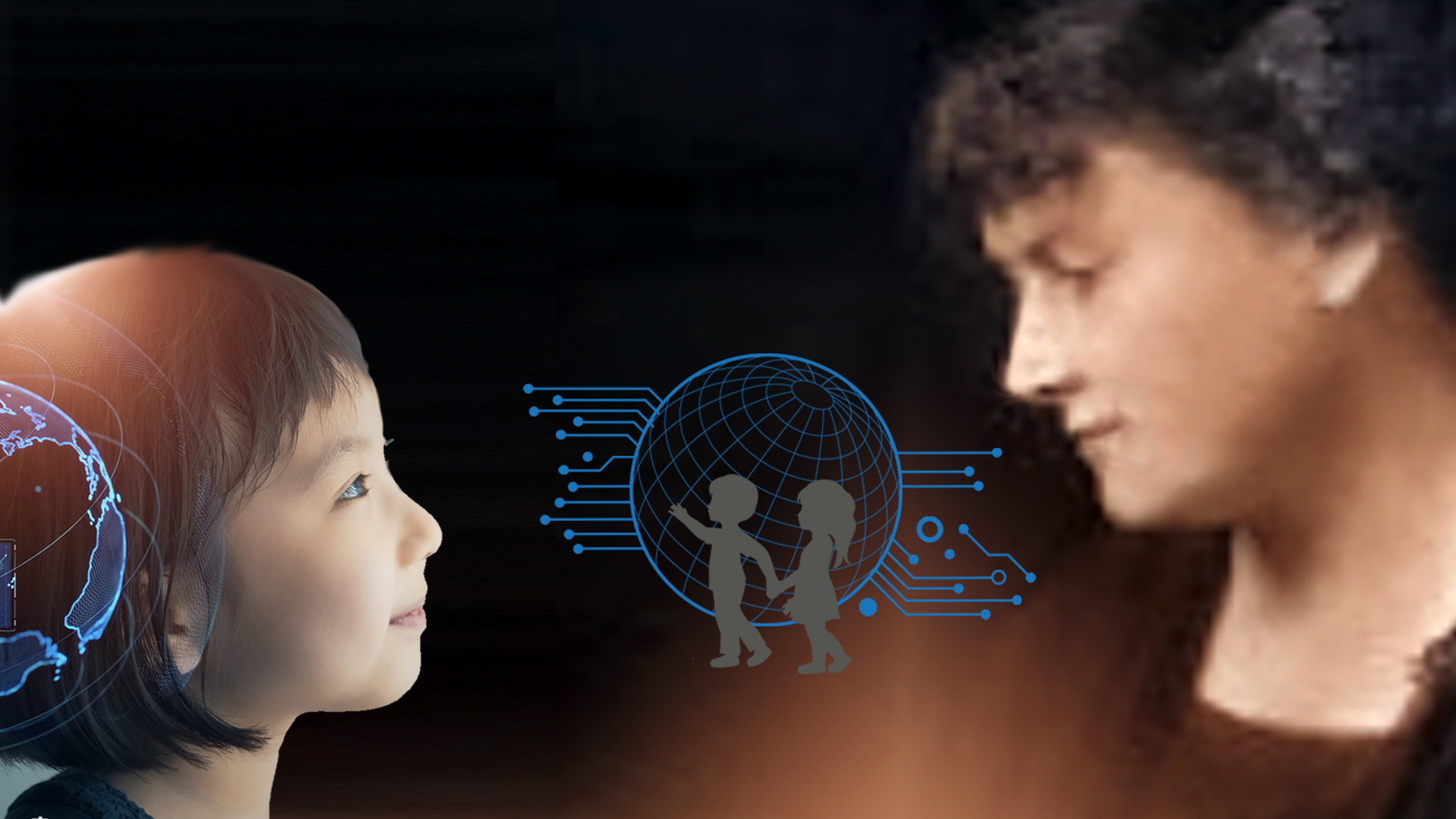
Montessori-Inspired Education for Diverse Learners
MILDL-LSE prepares Montessori-inspired educators with specialized knowledge and practical competencies to understand individual learning differences, create responsive learning environments, and nurture every child’s independence, confidence, and potential.
A Distinct Educational Specialization Dedicated to Diverse Learners
MILDL-LSE stands for Montessori-Inspired Learning for Diverse Learners — Learning Support Educator. It is a SEELS professional-development pathway for educators and learning-support practitioners who want to help children with different abilities, readiness levels, learning profiles, interests, languages and support needs.
The educator begins with the child: attentive observation, a thoughtfully prepared environment, meaningful choice, purposeful repetition, concrete materials and the gradual development of independence. MILDL-LSE adapts these essential Montessori principles to different learning strengths, languages, developmental readiness and educational barriers.
Educator-led. Montessori-inspired. Learner-centered. Open to collaboration. MILDL-LSE advances Montessori-inspired education as a distinct professional specialization dedicated to understanding, educating and nurturing diverse learners through individualized learning, prepared environments and the development of independence and human potential.
As skilled educators, MILDL-LSE practitioners design and adapt purposeful educational experiences, observe progress, engage families and exercise sound professional judgment within their educational responsibilities.
Observe. Understand. Prepare. Educate. Empower.
Begin with how the child learns—not a diagnostic label. Observe learning strengths and barriers, prepare an accessible environment, adapt instruction, and document progress. Work with families and recognize when a qualified professional’s contribution is appropriate.
Returning to Montessori’s Educational Roots
The foundations of Montessori education include her early educational work with children whose learning potential was widely underestimated.
Before the first Casa dei Bambini opened in 1907, Dr. Maria Montessori worked with children then classified by institutions as intellectually disabled. At Rome’s Orthophrenic School around 1900, her educational work drew upon careful observation, sensory experiences, purposeful movement, structured materials and individualized instruction, including the earlier work of Itard and Séguin.
In her published account, Montessori reported that some children she taught were able to pass public-school examinations in reading and writing. These results challenged the prevailing assumptions about their educational possibilities. The available accounts do not establish an overall pass rate, nor do they demonstrate that pupils’ classifications were concealed from examination authorities.
MILDL-LSE draws inspiration from these educational beginnings—not to recreate the past, but to advance responsive Montessori-inspired teaching informed by contemporary evidence, accessibility and inclusive-education practice.
Primary source: Maria Montessori, The Montessori Method (1912), Chapters II and XVI.
Observe the learner. Prepare the environment. Adapt instruction. Nurture independence.
Montessori’s early work invites a question that remains vital today: How can educators adjust their teaching so that learners whose potential has been overlooked can participate, progress and flourish?
For MILDL-LSE, this is an educational commitment grounded in respect for the child and developed through trained, reflective professional practice.
From early educational experiments to contemporary MILDL-LSE practice
The examples below illustrate continuity in educational principles—not claims that historical exercises were treatments or that they directly caused any particular examination result.
| Montessori’s early educational approaches | MILDL-LSE contemporary application |
|---|---|
| Careful observation of individual responses | Educational observation, learner strengths and barriers to participation |
| Matching letter forms, tracing and connecting speech with symbols | Accessible literacy activities and explicit, evidence-informed language instruction |
| Sensory discrimination and purposeful movement | Adapted concrete materials and accessible prepared environments |
| Individual guidance, practice and progressive learning tasks | Differentiated instruction, meaningful goals and regular review |
| Attention to growing capability and independence | Learner participation, agency, practical-life learning and confidence |
| Observation of educational progress | Learning portfolios, documented progress and reflective assessment |
Historical activities are described in Montessori’s published accounts; we cannot identify the exact exercise sequence followed by each pupil who passed the examinations. Contemporary educational practice must also respect existing assessments, agreed accommodations and appropriate professional referrals.
IC first. Then apply Montessori to diverse learners.
The Montessori Introductory Course is not a formality. It develops a shared understanding of observation, the prepared adult, the prepared environment, purposeful activity and independence before a participant considers specialized learning support.
1. SEELS Montessori Introductory Course (IC)
Required before the Philippine MILDL-LSE introduction and full pathway, with individual prior-learning equivalency review subject to SEELS approval.
2. MILDL-LSE Applied Introduction
A three-hour, post-IC Weekend Academy orientation linking Montessori principles to educational observation, learner diversity, literacy, numeracy, family partnership and professional limits. Separate from the 42-hour professional course.
3. 42-hour professional pathway + practicum
Develop competence in individualized educational planning, classroom adaptation, progress monitoring, family engagement and supervised practice. Certificate completion follows SEELS training and assessment requirements.
Japan: Digital Montessori Education (DME) remains the normal prior Montessori foundation for post-DME specialization. The Philippine IC and WEA sequence does not replace that Japan route.
From Montessori-inspired pedagogy to independent professional practice
After the Montessori IC and separate three-hour WEA introduction, the Philippine 42-hour specialization develops practical educator competencies. The applied practicum and assessment follow its own completion requirements.
Montessori-Inspired Pedagogy for Diverse Learners
Part I develops the educational foundation: how to observe, prepare, adapt and support learning without crossing into clinical practice.
Montessori & Learner Diversity
Individual pace, readiness, freedom within structure, independence and the role of the educator.
Observation Before Adaptation
Objective observation of attention, movement, communication, participation, interests and barriers.
Prepared Environment
Order, accessibility, predictable routines, movement, work areas, transitions and choice within limits.
Practical Life & Independence
Purposeful activities supporting order, confidence, coordination, participation and independence.
Sensorial Learning
Concrete and multisensory learning through matching, grading, classification, sequence and control of error.
Language & Literacy
Oral language, sounds, symbols, blending, writing, reading, vocabulary and multilingual learning support.
Numeracy
Concrete-to-abstract learning, quantity, symbol, sequencing, place value and differentiated progression.
Concentration & Participation
Work cycle, routine, movement, challenge, recovery, confidence and social-emotional participation.
Individualized Learning Planning
Observe → identify need → set goal → prepare → present → support → document → review.
Family Partnership & Referral
Parent communication, continuity at home, confidentiality, scope and referral readiness.
MILDL-LSE Professional Practice, Family Partnership & Collaborative Support
Part II strengthens the educator’s independent practice: educational records, family partnership, appropriate adaptations, thoughtful referral and collaboration when needed.
Educational Professional Identity
Educator responsibilities, scope, learner advocacy, ethical judgment, family priorities and the roles of possible collaborators.
Observation & Learning Documentation
Clear educational records, learner strengths, progress notes, family-friendly communication and privacy.
Family Partnership & Learning Adjustments
Plan with families, adapt lessons and environments, review progress, and incorporate appropriate professional guidance when available.
Collaborative Support & Responsible Referral
Optional specialist consultation, agreed referrals, consent, confidentiality, case discussion and professional boundaries.
Educators and specialists: complementary expertise
MILDL-LSE welcomes collaboration with families, educators, healthcare professionals and other specialists, recognizing that complementary expertise contributes to the holistic development of every child. Invited professionals may enrich the educator-led curriculum through seminars, consultations and shared learning.
Core educational training and assessment are led by SEELS educators. Specialist contributions are optional enrichment. Professional assessment and regulated therapy, when appropriate, remain separate services delivered by qualified practitioners.
What a MILDL-LSE does — and does not do
MILDL-LSE may
- observe learners educationally;
- support literacy and numeracy;
- adapt educational activities;
- prepare responsive learning environments;
- promote practical-life skills and independence;
- document educational progress;
- communicate with families and schools;
- implement appropriate educational recommendations;
- participate in multidisciplinary communication;
- refer when needs exceed educational scope.
MILDL-LSE does not
- diagnose developmental, psychological or medical conditions;
- prescribe treatment;
- provide occupational therapy unless separately licensed to do so;
- provide speech-language therapy unless separately qualified;
- interpret clinical tests independently;
- alter a physician or therapist treatment plan;
- represent Montessori activities as regulated therapy;
- replace licensed or regulated professionals.
Putting pedagogy and professional practice together
Participants completing the full MILDL-LSE pathway prepare an applied learner-support case or portfolio demonstrating how educational observation, planning, family communication and professional referral can work together.
Suggested practicum outputs
- objective learner observation;
- learner-strength profile;
- prepared-environment adaptation;
- individualized learning-support plan;
- family-support note;
- educational adaptations and family partnership;
- appropriate referral or consultation question, where applicable;
- case presentation and reflection.
Philippines and Japan
MILDL-LSE shares the same professional purpose across both countries: to prepare educators who can support diverse learners educationally, communicate responsibly with families and professionals, and recognize when additional specialist support is needed.
Philippines
Full MILDL-LSE Professional Pathway
In the Philippines, MILDL-LSE is offered as a stand-alone professional-development pathway for educators, learning-support practitioners, tutorial and learning-center personnel, school staff, and others working with diverse learners.
- SEELS Introductory Course (IC) — required foundation before entering the pathway, subject to approved equivalency review;
- WEA MILDL-LSE Introduction — 3 Hours: post-IC applied orientation, separate from the 42-hour curriculum;
- Part I — 30 Hours: Montessori-Inspired Pedagogy for Diverse Learners;
- Part II — 12 Hours: MILDL-LSE Professional Practice, Family Partnership & Collaborative Support;
- Applied Practicum / Portfolio: learner-support planning, educational observation, documentation, reflection and supervised application;
- Assessment and Completion: recognition after satisfying the required training, assessment and practicum requirements.
Optional, non-compulsory specialist-enrichment sessions may also be offered with invited doctors, occupational therapists, psychologists, speech-language professionals and other qualified practitioners.
Japan
DME-Based MILDL-LSE Professional Specialization
In Japan, Digital Montessori Education remains the principal Montessori pedagogical foundation. MILDL-LSE builds on that preparation by extending DME graduates toward more focused professional practice in supporting diverse learners.
- Digital Montessori Education (DME) provides the broader Montessori pedagogical foundation;
- MILDL is integrated into the 2026–2027 DME innovation and capstone theme;
- graduates may proceed to the post-DME MILDL-LSE professional specialization;
- the specialization emphasizes objective educational observation and documentation;
- participants develop skills in interprofessional communication, understanding professional recommendations and translating appropriate recommendations into educational support;
- the pathway also covers family and school collaboration, case conferencing, professional boundaries, referral and responsible educational follow-through;
- an applied practicum or portfolio may be required for final MILDL-LSE recognition.
This pathway allows DME graduates to extend their Montessori preparation into diverse-learner educational support without presenting MILDL-LSE as a medical, therapeutic or clinical qualification.
Shared Professional Purpose
Whether undertaken through the full Philippine pathway or through post-DME specialization in Japan, MILDL-LSE remains an educational professional-development pathway. It does not replace regulated medical, psychological, therapeutic, speech-language, occupational-therapy or other licensed professional services.
Educational practice in schools and communities
SEELS is exploring implementation with interested educational partners, including GSMS Antipolo and a proposed Tagaytay community learning setting. These are potential educational development sites, not presently advertised as operational MILDL-LSE centers, accredited practicum sites or therapy facilities.
School-based learning support
Teacher mentoring, inclusive classroom strategies, literacy and numeracy support, prepared environments and parent collaboration, subject to each school’s approval and readiness.
Community-based learning support
Educational observation, individualized learning activities and caregiver workshops, subject to staffing, safeguarding and local permissions. Specialist participation may be invited when appropriate.
Accessible professional development
Final tuition may vary by cohort, venue, practicum arrangement and resource-speaker participation.
Philippines — Full 42-Hour Pathway
Suggested early enrollment: ₱12,000
Suggested installment option: 4 monthly payments of ₱3,500.
Japan — Post-DME Part II
Monthly installment available: ¥10,000 × 4 months
Post-DME MILDL-LSE professional specialization. Tuition reflects the Japan delivery context, administration, resource-speaker participation and related overhead.
Credential and professional-boundary note
MILDL-LSE is a private SEELS professional-development pathway. Completion confirms successful participation in the stated educational training, assessment and practicum requirements adopted by SEELS. It does not by itself confer a government teaching license, university degree, medical qualification, psychology credential, occupational therapy qualification, speech-language therapy qualification, or authorization to provide regulated clinical services.
Participants are expected to comply with the laws, licensing rules and professional regulations applicable in the country where they work or establish an educational service.
An MILDL-LSE begins as an educator: observing the learner, preparing the environment, adapting instruction, encouraging independence and reviewing progress. Specialists are welcome collaborators, not the foundation of the program.
Ask about MILDL-LSE
Use this form for student enrollment inquiries, institutional collaboration, professional-resource participation or future cohort information.
SEELS
Japan / Philippines